As of October 31, 2024, Uganda hosted 1,771,389 refugees and 49,089 asylum-seekers, making it the largest refugee-hosting country in Africa.1 The majority of refugees reside across 13 formal settlements (91%) and Kampala (9%), originating primarily from South Sudan (55%) and the Democratic Republic of Congo (31%).2 The influx of refugees, coupled with Uganda’s limited resources, has strained essential services, particularly in education, healthcare, and livelihoods. According to the 2019 Vulnerability and Essential Needs Assessment (VENA), 91% of refugee households were economically vulnerable.3 Uganda’s refugee population includes a high proportion of children and adolescents under 18 (54%), with 37% under the age of 12.4 Adolescents face unique challenges, including disrupted education, mental health issues, and exposure to gender-specific risks such as child marriage and exploitation. Despite significant humanitarian efforts, data gaps remain, especially regarding adolescents’ perspectives and experiences.
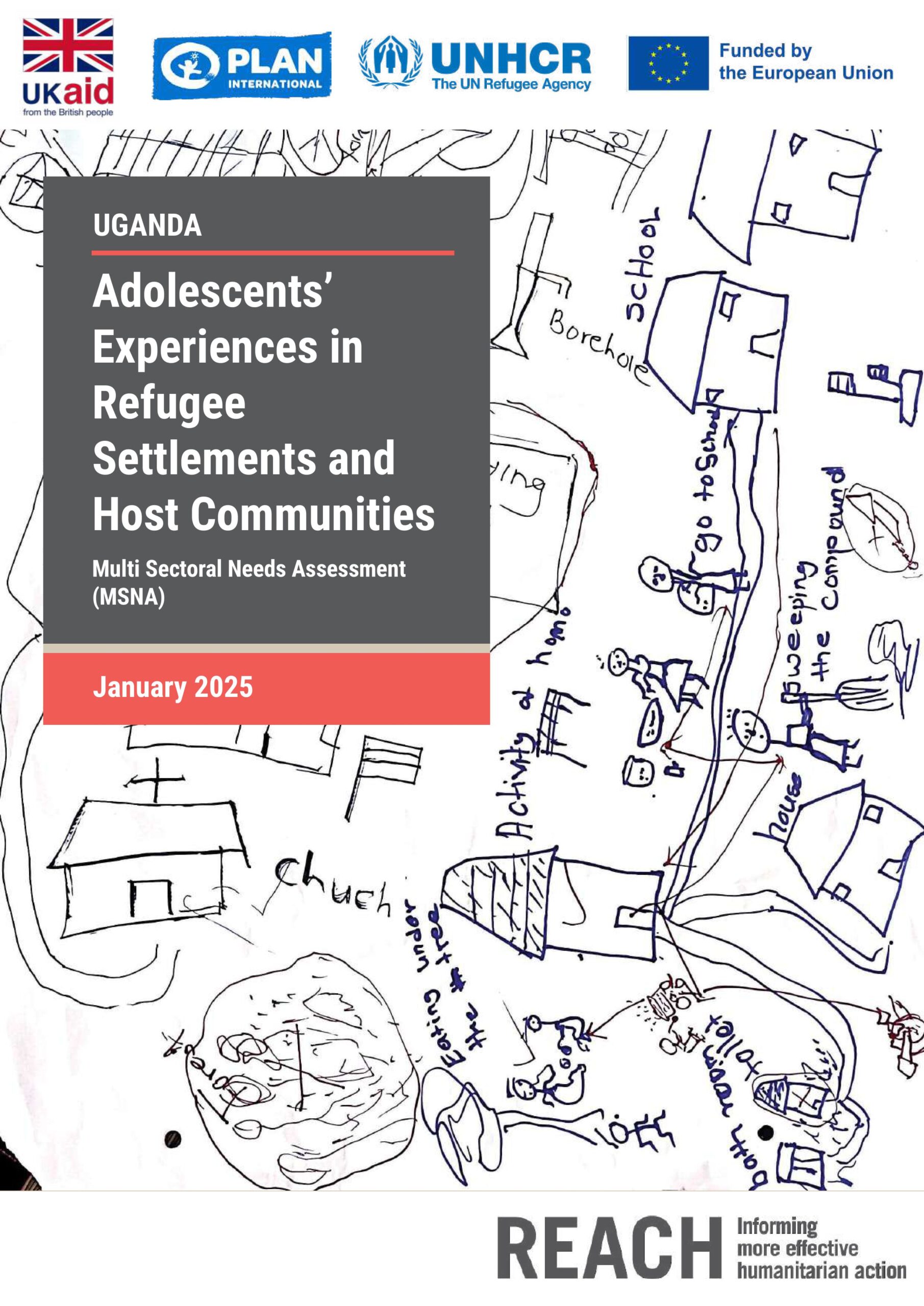
The 2024 Adolescent Needs Module was conducted collaboratively by REACH and Plan International Uganda, and funded by Plan International Germany and Australia, the United Nations High Commissioner for Refugees (UNHCR), the European Civil Protection and Humanitarian Aid Operations (ECHO), and the Foreign, Commonwealth & Development Office (FCDO). It sought to address critical gaps in understanding adolescents’ needs, as previous assessments largely relied on caregiver and expert perspectives, neglecting adolescents’ voices. These gaps hinder effective policymaking and program design, particularly for education, protection, healthcare, mental health, and livelihoods. The assessment aimed to amplify adolescent voices and provide actionable insights to improve humanitarian interventions.
The assessment employed a qualitative approach, targeting both refugee and host community adolescents aged 10–19 years in Bidibidi, Adjumani, and Kyangwali settlements, as well as urban neighborhoods in Kampala with high refugee populations. Data was collected from August 24 to September 13, 2024, through 46 focus group discussions (FGDs) and 7 key informant interviews (KIIs). FGDs were disaggregated by age (10–12, 13–15, and 16–19) and gender to ensure inclusivity and address sensitive topics. Participants were mobilized with the support of Plan International, adhering to ethical guidelines and safeguarding principles. While the initial target of 52 FGDs was reduced to 46 due to logistical challenges, the assessment successfully captured diverse adolescent perspectives. Key limitations include access constraints with host communities in Kyangwali and contextual challenges.