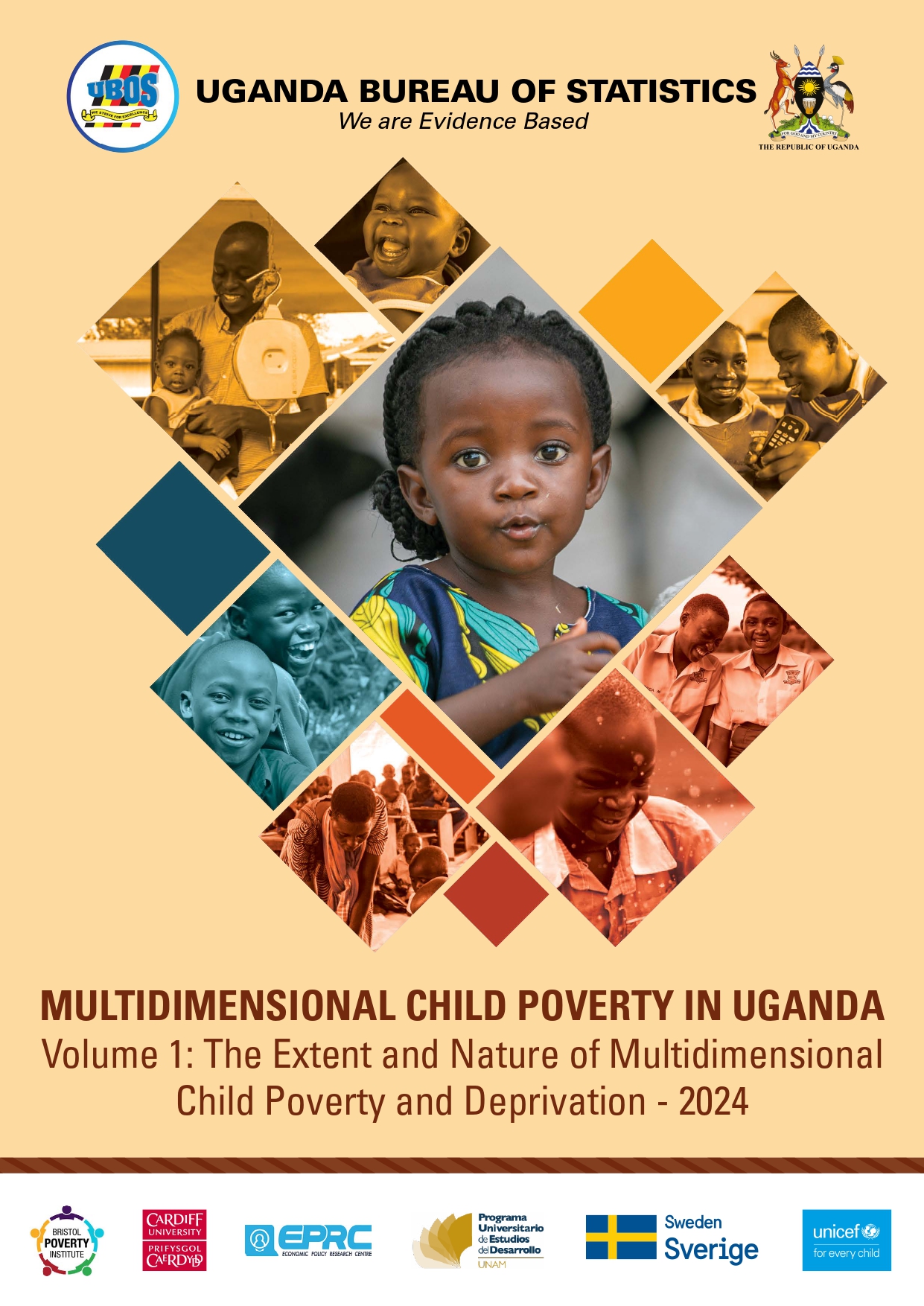
The purpose of this report is to describe the extent and nature of both monetary and multidimensional child poverty in Uganda based on the 2019/20 Uganda National Household Survey (UNHS). It looks at children living in households surviving on very low incomes, as well as those suffering multiple deprivations, in order to provide a comprehensive picture of the way poor children are living in Uganda today. Rights-based analytical approaches consistent with Uganda poverty descriptions were used in this report previously pioneered in the multi-dimensional child poverty, report based on 2016/17 UNHS. This consensual approach, used to measure multi-dimensional child poverty has been used by over 50 countries and the methodology is well documented in this report.
The report finds that although between 2016/17 and 2019/20 the monetary poverty rate for adults fell slightly, there was no improvement for children as 23% were monetary ‘poor’ in 2019/20 similar to the situation in 2016/2017. The multi-dimensional child poverty results present a contrasting picture to the monetary poverty results, with multidimensional child poverty declining from 56% in 2016/17 to 44% in 2019/20. Monetary and multidimensional child poverty is higher in rural areas compared to urban areas. Specifically, monetary child poverty is 14% in urban areas compared to 26% in rural areas in 2019/20. Similarly, multidimensional child poverty stood at 27% in urban areas compared to 50% in rural areas.